Brasil
Daily Summary — COP15 — March 24
The launch of the global report on migratory freshwater fish this Tuesday (March 24), on the second day of the 15th Meeting of the Conference of the Parties (COP15) to the Convention on the Conservation of Migratory Species of Wild Animals (CMS), has raised an alarm about the accelerated collapse of these populations. Considered the most comprehensive study ever produced on the subject, it indicates an average decline of 90% in CMS-listed species since 1970, revealing a silent crisis in freshwater ecosystems.
See the global report here.
Learn more about CMS COP15 here.
According to the study, river degradation—primarily caused by dams, pollution, overfishing, and climate change—has disrupted essential migratory routes for species’ reproduction and survival. As these fish depend on connected river systems, often crossing national borders, the report emphasizes that the response requires international cooperation. It also notes that hundreds of species already require urgent conservation action at a global scale, with particular attention to major river basins such as the Amazon and the La Plata.
In this context, Brazil is seen as a strategic actor, both for hosting some of the world’s main migratory routes and for presenting concrete protection proposals. Brazilian contributions focus on measures targeting South America’s two largest river systems—the Amazon and the La Plata–Paraná—and combine scientific assessment with coordinated action proposals:
-
In coordination with Bolivia, Colombia, Ecuador, Peru, and Venezuela, Brazil proposed the Regional Action Plan for Amazonian Migratory Catfish. Developed through an intergovernmental process between 2024 and 2025, the Brazilian government submitted the document to the CMS Secretariat in October 2025 for consideration at COP15.
-
The Amazon Basin is identified as one of the last major refuges for freshwater migratory fish, although it faces increasing pressure from development activities.
-
A case study associated with the report identified 20 Amazonian species with potential for inclusion in Appendix II of the Convention.
-
Among the emblematic species is the gilded catfish (Brachyplatystoma rousseauxii), which undertakes migrations of up to 11,000 kilometers—one of the longest ever recorded in freshwater environments.
-
Brazil also supports the inclusion of the spotted catfish (Pseudoplatystoma corruscans) in Appendix II of the Convention, highlighting the need for coordinated actions in the La Plata Basin, where the species faces threats such as dams, altered river flows, and fishing pressure.
NEGOTIATION AGENDA
Technical negotiations advanced in the Committee of the Whole and in working groups, but the referral of some issues to technical bodies may concentrate decisions in the coming days, including:
-
FINANCING: The issue was central to discussions. The proposal to establish a dedicated financial mechanism for the Convention divided positions: Brazil, along with Latin American countries, supported the initiative, while the European Union and its allies pointed to the risk of overlap with existing instruments. Brazil also stood out in discussions on the Samarkand Strategic Plan for Migratory Species 2024–2032, advocating for targets focused on resource mobilization. Adopted at COP14, the plan defines priorities for the conservation and sustainable use of migratory species and their habitats.
-
INTERNATIONAL COOPERATION: Stronger alignment among environmental agreements gained traction, particularly partnerships with the Convention on International Trade in Endangered Species of Wild Fauna and Flora (CITES) and the Intergovernmental Science-Policy Platform on Biodiversity and Ecosystem Services (IPBES). During the presentation of the global report on migratory species (which indicates a declining trend), Brazil argued that support for the implementation of the Convention should go beyond financing.
Brazil also proposed adjustments to financing to combat illegal capture of species, supported ecological connectivity, and advocated for simplified reporting in transboundary areas. It also highlighted the role of traditional communities and called for increased resources for wildlife health.
Workshop: The Role of Law and Judges
National and international authorities reached a common understanding: protecting migratory species requires more than formal commitments and depends on effective enforcement of laws and cooperation among countries along migratory routes. This topic was addressed in the workshop “The Role of Law and Judges,” which underscored the strategic role of law and the judiciary in implementing environmental agreements and tackling biodiversity loss (read more here).
The Brazilian judiciary used the opportunity to announce the development of a proposal to establish a specialized environmental court in the Pantanal, in Bonito (MS). The initiative aims to strengthen prevention and response capacity to environmental damage in one of the country’s most sensitive regions, as well as to serve as a model for other locations.
It was also emphasized that the effectiveness of the Convention depends on incorporating its guidelines into national legislation, with clear rules, effective enforcement, and strengthened institutions. In addition, the need for international cooperation was highlighted, as migratory species cross borders and connect ecosystems worldwide.
For COP15 President and Executive Secretary of Brazil’s Ministry of the Environment and Climate Change (MMA), João Paulo Capobianco, the survival of these species is directly linked to joint action by countries, supported by the rule of law and the concrete implementation of international agreements.
The President of the Superior Court of Justice (STJ), Herman Benjamin, emphasized the importance of a preventive role for the justice system in the face of the environmental crisis. He also warned that habitat degradation directly compromises species survival and that many impacts are irreversible, requiring anticipatory responses.
CMS Executive Secretary Amy Fraenkel reinforced the need to translate scientific evidence into effective legal instruments. For Fraenkel, integrating different legal frameworks and public policies is essential to address pressures such as habitat loss, pollution, and climate change.
Pantanal Day
The Government of Brazil emphasized that protecting the Pantanal requires an approach that goes beyond geographic boundaries and integrates multiple solutions. During Pantanal Day, MMA Deputy Executive Secretary Anna Flávia de Senna Franco highlighted the importance of cross-country integration and sustainable financing to ensure concrete results. “The territory of migratory species is planet Earth, and it has no limits,” she stated.
Under the theme “Pantanal in motion: science, governance, and financing for the conservation of migratory species,” the event brought together representatives from government, academia, and civil society (read more here).
Recognized as one of the largest wetlands in the world and protected under the Ramsar Convention, the Pantanal was highlighted as a symbol of the connectivity essential to preserving biodiversity and migratory species.
Key points discussed included the need to expand habitat connectivity, integrate science and technology, and strengthen public policies. Sustainable financing and the expansion of Protected Areas were highlighted as strategic tools to ensure conservation of the biome and the maintenance of migratory routes in the long term.
Brazil Space
Representatives from Brazil and other countries reinforced that protecting migratory fauna requires coordinated actions that connect ecosystems, countries, and different levels of governance (read more here).
Discussions at Brazil Space highlighted the role of wetlands, marine corridors, and sustainable fisheries management as pillars of conservation. One of the highlights was the relationship between mangroves and the Pantanal—interconnected ecosystems linked by migratory routes and essential for maintaining biodiversity. In this context, Brazil reaffirmed the expansion of Protected Areas in the Pantanal as a strategy to ensure ecological connectivity and habitat protection.
The debates also pointed out that the effectiveness of these measures depends on multilevel governance capable of integrating public policies and reaching local communities, as well as clearer and more accessible communication. Pressure from deforestation and the importance of international agreements in preserving natural corridors were also highlighted.
(With information from the Earth Negotiations Bulletin)
Special Advisory for Social Communication of MMA
[email protected]
(61) 2028-1227/1051
Visit MMA’s Flickr


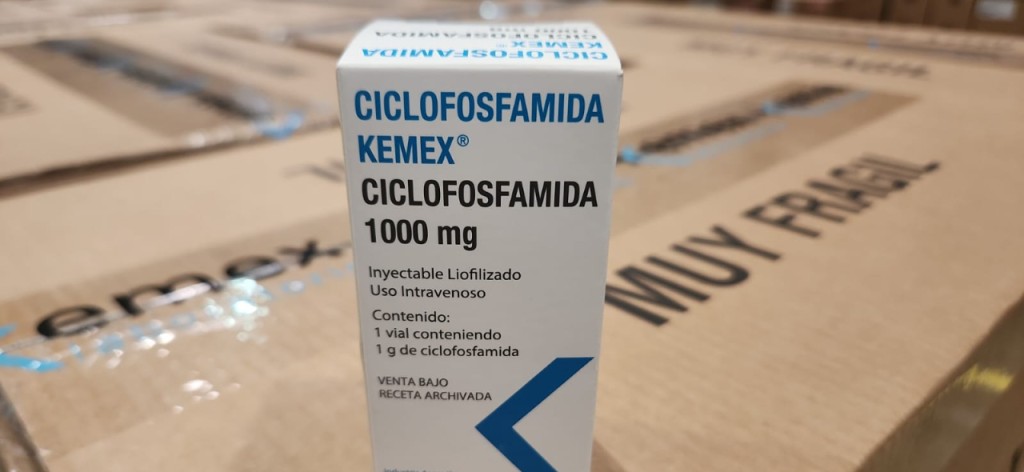
O Ministério da Saúde iniciou, nesta quarta-feira (23), a distribuição, de forma excepcional, do medicamento ciclofosfamida para todas as regiões do país, garantindo a continuidade do tratamento de pacientes com câncer no SUS. A aquisição do fármaco é, em geral, realizada diretamente pelos estados e centros de referência oncológicos. No entanto, após o único fornecedor nacional apresentar dificuldades técnicas na produção, o Governo do Brasil interveio e iniciou a compra internacional de 140 mil unidades, sendo 100 mil comprimidos de 50 mg e 40 mil frascos-ampola de 1 g , utilizando o poder de negociação e compra do sistema público de saúde.
O primeiro lote, com 7 mil ampolas, foi entregue ao almoxarifado do Ministério da Saúde na quinta-feira (22), com investimento federal de mais de R$ 1 milhão. O Instituto Nacional do Câncer (Inca), localizado no Rio de Janeiro, está entre os primeiros contemplados, com 377 frascos-ampola. O envio do medicamento às demais instituições de referência será realizado de forma gradativa, conforme agendamento prévio. Caso necessário, poderão ser adquiridos de forma imediata mais 40 mil comprimidos e 40 mil frascos-ampola, de modo a evitar o desabastecimento da rede pública.
A secretária de Ciência, Tecnologia e Inovação em Saúde, Fernanda De Negri, reforçou que a ação estratégica assegura o abastecimento dos estoques no SUS até julho, prazo estabelecido pela fornecedora brasileira para a regularização da oferta, bem como o cuidado integral e em tempo oportuno às pessoas.
“Para uma aquisição assertiva, realizamos um estudo com base na necessidade apresentada por cada centro de referência e no uso médio mensal do medicamento. Não há desabastecimento na rede pública. O Ministério da Saúde agiu de forma estratégica para assegurar o estoque diante da dificuldade de produção apresentada pela empresa responsável, reforçando o compromisso com o cuidado de todos os pacientes assistidos no SUS”, disse a secretária.
A intervenção emergencial do Ministério da Saúde foi realizada com máxima agilidade, efetivando-se em menos de um mês, por meio do Fundo Estratégico da Organização Pan-Americana da Saúde (OPAS). A necessidade de cada unidade de saúde para o envio de novas remessas será monitorada em parceria com as secretarias estaduais de saúde e o Conselho Nacional de Secretários de Saúde (Conass).
A ciclofosfamida é um quimioterápico indicado para o tratamento de diversos tipos de câncer, como mama, ovário, linfomas e leucemias. Com a regularização do cenário de oferta, a aquisição e a disponibilização do medicamento voltarão a ser realizadas pelos Centros de Assistência de Alta Complexidade em Oncologia (Cacons) e pelas Unidades de Assistência de Alta Complexidade em Oncologia (Unacons), por meio da Autorização de Procedimentos de Alta Complexidade (APAC), conforme pactuação estabelecida entre os entes federativos na Comissão Intergestores Tripartite (CIT).
Priorização de Análise na Anvisa
Em conformidade aos esforços de manter a assistência interrupta no SUS e realizar compras do medicamento no mercado externo, o Ministério da Saúde solicitou à Agência Nacional de Vigilância Sanitária (Anvisa) celeridade na análise nos processos de importação excepcional e a avaliação de mecanismos que garantiram a maior celeridade na liberação de lotes importados. A pasta mantém diálogo semanal com o órgão, apresentando o cenário dos estoques e capacidade de oferta do mercado nacional para atender a necessidade da rede pública de saúde.
Reestruturação da assistência oncológica no SUS
O Governo do Brasil vem fortalecendo o cuidado aos pacientes oncológicos por meio de iniciativas estruturantes, com a implementação do Componente da Assistência Farmacêutica em Oncologia (AF-Onco), que representa uma importante atualização no financiamento e no acesso a medicamentos oncológicos no Sistema Único de Saúde (SUS). O novo modelo substitui o repasse fixo por procedimento por três modalidades de financiamento, com foco em mais eficiência, transparência e cuidado integral ao paciente.
Com a nova política, a aquisição dos medicamentos oncológicos incorporados ao SUS, incluindo o ciclofosfamida, passa a ser realizada diretamente pelo Ministério da Saúde, ampliando o investimento federal e permitindo negociações nacionais para melhores preços. Entre os próximos passos estão a regulamentação dos protocolos prioritários e a adaptação dos sistemas de regulação, com previsão de período de transição para garantir a continuidade da assistência aos pacientes.
Ana Freitas
Ministério da Saúde
Fonte: Ministério da Saúde


MEC Livros aumenta acervo para 25 mil obras

Palmeiras goleia o Jacuipense e encaminha vaga às oitavas da Copa do Brasil

Atlético-MG abre vantagem sobre o Ceará na Copa do Brasil com vitória na Arena MRV

Ministério da Saúde inicia distribuição emergencial de medicamento oncológico em todo o país

CMN aprova linha de financiamento com recursos do FNAC para o setor aéreo
-

 Política Nacional6 dias ago
Reconhecimento do circo como manifestação cultural vai à sanção
-
 Educação7 dias ago
Brasil e Tanzânia consolidam cooperação educacional
-

 Paraná7 dias ago
Paraná tem redução de 10% nos homicídios e 22% nos roubos no 1º trimestre de 2026
-

 Agro7 dias ago
Exportações de melão crescem na safra 2025/26, mas setor projeta ajustes para próxima temporada
-
 Brasil6 dias ago
Curso da Senasp no Acre fortalece combate à lavagem de dinheiro com uso de tecnologia
-
 Brasil6 dias ago
No ABC, Luiz Marinho chama empresas locais e institutos de formação a firmar parceria de qualificação profissional com o MTE
-

 Brasil5 dias ago
Saúde entrega primeiros veículos para transporte intermunicipal de pacientes e anuncia mais de R$ 400 milhões para o Ceará
-

 Paraná6 dias ago
Resultado final dos selecionados no Coopera Paraná confirma maior edição do programa