Brasil
Daily Summary – COP15 – March 26

On the fourth day of the 15th Meeting of the Conference of the Parties (COP15) to the Convention on the Conservation of Migratory Species of Wild Animals (CMS), the negotiations brought to the fore a dimension that is often overlooked yet vital for biodiversity: the migratory routes of wild animals that connect biomes, countries and continents. Brazil appears as a key player in this movement, both due to its strategic position in important bird corridors and to its central role in conserving species that cross national boundaries.
Discussions at COP15 addressed terrestrial, aquatic and marine environments, with special attention to the Amazon Basin, recognized as one of the world’s largest freshwater fish migration systems. The advancement of instruments such as the Multispecies Action Plan for the Amazonian Migratory Catfish reinforces the region’s importance for biodiversity and for the food security of local communities.
In the marine sphere, the construction of global migratory routes and their alignment with international agreements broadened the debate on ocean governance, an area where Brazil has a strategic role due to its extensive coastline. The discussions showed that protecting these routes requires more than isolated actions and demands international cooperation, a solid scientific basis, and coordination among countries.
NEGOTIATION AGENDA
Alongside Peru, Bolivia, Panama, Ecuador, Paraguay, the European Union, Senegal, Venezuela, and the International Union for Conservation of Nature (IUCN), Brazil supported France’s proposal to include species in the Convention’s annexes, such as the giant otter (Pteronura brasiliensis). Present in the Pantanal and Amazon biomes, the species reinforces the country’s role in protecting aquatic ecosystems and conserving environmental‑quality indicator species.
Brazil also endorsed proposals to include the Zimbabwe cheetah and the striped hyena in international protection lists. The species were recommended for adoption by the Policy Committee (CoW), the technical body responsible for consolidating proposals before the final decision‑making by the Parties to the CMS.
Within the group of avian species, the proposals related to petrels (Pterodroma spp.) received support from delegations and were also forwarded by the CoW for adoption, indicating broad alignment among countries. In contrast, the proposal to remove the Bukhara deer (Cervus elaphus yarkandensis) from Appendix I did not advance. The measure faced resistance from the European Union and the United Kingdom and remained without consensus.
Brazil requested the postponement of the analysis of the CRP (Conference Room Paper)—an informal negotiation document used to consolidate and adjust texts under discussion on resource mobilization—until the language could be harmonized with other decisions under negotiation. Although with no direct impact on the country, there was progress on action plans for birds, including bustards, the steppe eagle, Afro‑Eurasian terrestrial birds, and vultures.
There were also broader discussions on species conservation and ecological connectivity, including topics related to sharks and rays, Amazonian catfish, the prevention of illegal bird hunting, and tackling bird poisoning.
Advances were also made on instruments addressing migratory routes, with emphasis on the creation of a permanent flyway mechanism (ecological corridors used by migratory species along their movements between breeding, feeding and resting areas) and its marine dimension. The agenda also included debates on the jaguar (Panthera onca) and the analysis of different amendment proposals presented by the Parties.
Furthermore:
-
MARINE BIRDS AND OCEANIC ROUTES: Progress in identifying global marine migratory routes, based on tracking data, reinforces Brazil’s position as a country with an extensive coastline. The discussions highlighted gaps in the protection of these species and opened space for greater Brazilian engagement in the marine conservation agenda.
-
GOVERNANCE AND INTERNATIONAL SYNERGIES: The progress in identifying global marine migratory routes, underpinned by tracking data, strengthens Brazil’s standing as a country with a large maritime area. Discussions pointed to shortfalls in the protection of these species and paved the way for deeper Brazilian involvement in the marine conservation agenda.
-
INTERNATIONAL COOPERATION: Transversally, the debates underscored Brazil’s role in building multilateral solutions for the conservation of migratory species. The need for coordinated actions, grounded in science and cooperation among countries, was highlighted as essential for tackling challenges that transcend national borders.
Atlas of Migratory Routes of the Americas
As the negotiations progressed at a fast pace, the conservation of migratory birds in the Americas gained fresh momentum. Launched at a special event, the Atlas of Migratory Routes of the Americas consolidates, for the first time, detailed data on the trajectory of 622 species that cross the continent, establishing an unprecedented scientific basis to guide integrated environmental policies among countries (read more here).
Developed by the CMS in partnership with the Cornell Lab of Ornithology, the Ministry of Environment and Climate Change (MMA) and the U.S. Fish and Wildlife Service (USFWS), the Atlas identifies the so‑called Bird Concentration Areas (ACAs) across all phases of the species’ life cycle, based on millions of records generated by citizen science on the eBird platform.
The tool makes it possible to map, with unprecedented accuracy, where birds breed, rest, and even spend the winter, highlighting the ecological corridors that connect the biomes of the Americas.
João Paulo Capobianco, President of COP15 and Executive Secretary of the MMA, stressed that the platform reinforces the need for international cooperation to protect these corridors and to ensure the survival of migratory species.
However, the scientific progress comes with a warning. Out of the 622 species analyzed, 33 are globally threatened, while recent data indicate a growing extinction risk, especially among coastal birds facing strong pressure from habitat loss and environmental degradation. Furthermore, about 47% of the areas deemed essential for these species still lack formal protection, exposing critical gaps in conservation.
Species such as the buff‑breasted sandpiper (Calidris subruficollis) and the marbled godwit (Limosa haemastica) are examples of populations in sharp decline along their migratory routes. Experts emphasized that the response to this problem depends directly on cooperation among countries and the incorporation of scientific data into public‑policy formulation, under risk of jeopardizing the survival of these species across the entire continent.
Traditional and scientific knowledge together
Representatives of Indigenous peoples and traditional communities presented the COP15 President with direct demands for recognition, listening, and inclusion in decision‑making processes on biodiversity conservation.
Leaders from different regions and biomes of Brazil stressed that their territories are fundamental for the protection of migratory species and that their ways of life are intrinsically linked to maintaining natural cycles. Under the slogan “Nothing about us without us,” they advocated effective participation in the formulation of environmental policies and the recognition of ancestral knowledge as an essential component of solutions.
The letter delivered highlighted that conservation depends on the integration of traditional and scientific knowledge, while warning that decisions taken without the participation of these populations tend to overlook local dynamics that are crucial for biodiversity conservation.
Among the main demands is the creation of a permanent participation space for Indigenous peoples and traditional communities within the CMS framework, ensuring continuous and structured presence in these processes. Speeches also brought to light the challenges experienced in their territories, such as deforestation, pollution and the impacts of large projects, while reaffirming the role of these populations as guardians of nature.
Upon receiving the document, João Paulo Capobianco acknowledged the importance of these contributions and emphasized the need to advance in building mechanisms that ensure the active participation of these groups, strengthening the articulation between traditional knowledge, science, and public policies.
Blue shark
Brazil announced a new normative instruction from the Brazilian Institute of the Environment and Renewable Natural Resources (Ibama) to strengthen control over the international trade of the blue shark (Prionace glauca), a migratory species that is widely exploited.
Aligned with the commitments undertaken by the country under the Convention on International Trade in Endangered Species of Wild Fauna and Flora (CITES), which included the species in Appendix II in 2023, the regulation sets out rules for export, import and re‑export, requiring licenses, proof of legal origin, and technical‑scientific assessment of the sustainability of exploitation (read more here).
Among the main points are the prohibition of exporting separated fins, the ban on capturing females and young individuals, and the limit of 20% of the total catch per trip, in addition to the requirement that the species not be targeted by fishing geared to foreign trade. Operations will now be concentrated in authorized customs facilities, with greater control, traceability, and the possibility of inspections and laboratory analyses.
In a press conference, João Paulo Capobianco stated that the initiative is part of a broader strategy to strengthen multilateralism and environmental governance, positioning Brazil as a leader in the implementation of international agreements. Ibama President Rodrigo Agostinho highlighted that the measure represents an advance in fishery management by combining technical rigor and monitoring with greater transparency in trade.
Brazil Space
The conservation of the jaguar (Panthera onca) took center stage in the debates held at the Brazil Space. Representatives of the MMA stressed that the species’ survival is directly linked to the preservation of ecological corridors that cross borders and to the strengthening of environmental‑education initiatives (read more here).
COP15 President João Paulo Capobianco emphasized that the transboundary character of the jaguar requires cooperation among countries so that conservation actions are coordinated and effective.
It was noted that the species faces significant pressures in Brazil, especially in the Atlantic Forest and Caatinga, where habitat loss and conflicts with livestock farming are among the main threats. Classified as Vulnerable, the jaguar is also affected by retaliatory killings, forest fires, and the isolation of its populations, making it an important indicator of ecosystem integrity.
In response, experiences of cooperation in border regions were highlighted, such as in Iguaçu National Park (PR). Joint actions with Argentina have contributed to transforming the relationship between rural producers and the feline through environmental‑education and training initiatives that encourage coexistence and reduce conflicts, favoring the recovery of the species in ecological corridors shared by the two countries.
Borderless Connection
The program at the Borderless Connection space brought together strategic discussions on biodiversity conservation, habitat protection, and adaptation to climate change, with a special focus on solutions implemented in Brazil.
Among the highlights, the Biomar Network presented integrated actions aimed at conserving migratory species and marine biodiversity in the country, followed by discussions on financing for conservation and the role of subnational governments in implementing environmental policies, in the transition period between the CMS COP15 and the Biodiversity Convention COP17 (CBD).
The program also addressed fire‑prevention strategies and wildlife rescue in the Pantanal, as well as Integrated Fire Management (MIF) and the recovery of degraded areas as essential tools for the protection of landscapes and species.
The discussions also touched on urban tree‑planting as supporting infrastructure for migratory species, drawing on the experience of Campo Grande (MS), and on the use of digital infrastructure to strengthen governance and habitat protection. Innovative projects were also presented, such as carbon and biodiversity credits in the Serra do Amolar region, directed at conserving the Pantanal.
The day also included the launch of publications on migratory birds in Brazil and “school‑path birds,” as well as discussions on migratory species in wetlands under a climate‑emergency scenario, with a focus on the Pantanal. Finally, a round‑table discussion highlighted the role of “host” birds and symbolic species as indicators of ecosystem health.
(With information from Earth Negotiations Bulletin)
Special Advisory for Social Communication of the MMA
[email protected]
+55 (61) 2028-1227 / 1051
Access MMA’s Flickr


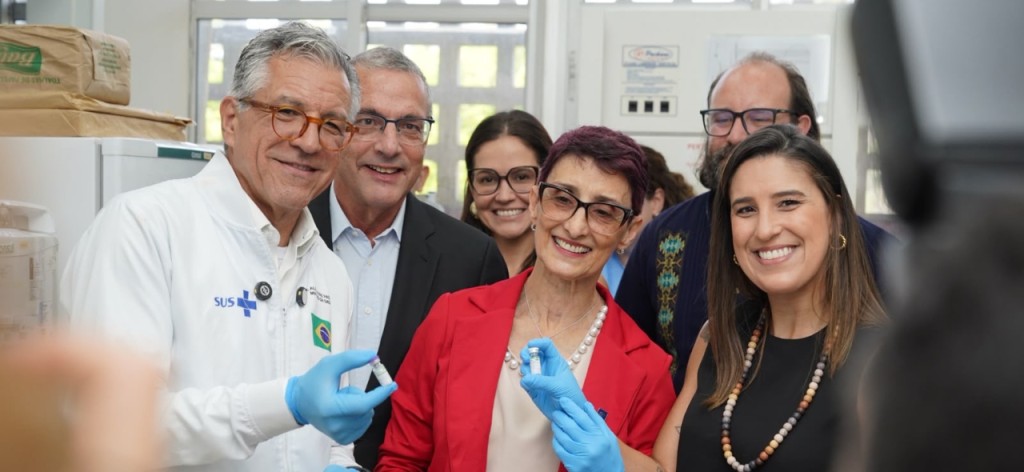
O Brasil avança no desenvolvimento da primeira vacina do mundo contra a malária causada pelo Plasmodium vivax, parasita responsável pela maioria dos casos da doença no país. Neste sábado (10), o ministro da Saúde, Alexandre Padilha, participou da apresentação do estudo, que recebeu autorização da Agência Nacional de Vigilância Sanitária (Anvisa) para testes em humanos. O imunizante, chamado de Vivaxin, é fruto de pesquisas conduzidas pelo Centro de Tecnologia de Vacinas (CTVacinas) da Universidade Federal de Minas Gerais (UFMG). A tecnologia é 100% nacional, com incentivo previsto de R$ 12 milhões do Ministério da Saúde para os ensaios clínicos de fases I, II e III.
“O país tem conseguido reduzir os casos e os óbitos por malária, mas a doença ainda é um problema importante para o país e para o mundo. O início do estudo clínico dessa vacina, desenvolvida integralmente em uma universidade pública brasileira, representa um avanço na busca por novas ferramentas de enfrentamento à doença e reforça a capacidade do Brasil de desenvolver soluções científicas próprias para ampliar a proteção da população”, destacou o ministro.
O estudo clínico de fase I avaliará a segurança da vacina, possíveis reações à aplicação e a capacidade de estimular uma resposta imunológica em 48 participantes sem infecção prévia, com idades entre 18 e 59 anos. O acompanhamento clínico será feito por 360 dias. O avanço na pesquisa da tecnologia representa um marco e abre a possibilidade de uma nova forma de prevenção contra a doença, que, em 2025, registrou 118.037 casos no território nacional. As duas vacinas contra malária recomendadas atualmente foram desenvolvidas para outra espécie do parasita, o Plasmodium falciparum, predominante na África. O P. vivax predomina nas Américas e na Ásia.
O CTVacinas integra o Centro Nacional de Vacinas (CNVacinas), um complexo científico estratégico para ampliar a capacidade do país de desenvolver vacinas e outras tecnologias de saúde. A previsão de investimento do Ministério da Saúde é de R$ 161,5 milhões em projetos para o desenvolvimento de imunizantes e testes inovadores, liderados pela unidade ou em parceria, por meio do Programa de Desenvolvimento e Inovação Local (PDIL), sendo R$ 135,5 milhões destinados a projetos do próprio Centro.

Foto: Laudemiro Bezerra/MS
Além da vacina contra a malária, o CTVacinas atua em outros projetos: uma plataforma de testes rápidos para diagnóstico de emergências sanitárias e agravos críticos para o SUS e sua validação por meio da produção de um TR para hepatite delta; vacina terapêutica para doença de Chagas; desenvolvimento de testes diagnósticos para malária e leishmaniose tegumentar; vacina para MPox baseada no vírus MVA; e vacina nasal de nanopartículas, para o controle da covid-19.
A unidade também atua para ampliar a capacidade brasileira em tecnologias de RNA mensageiro, uma plataforma na qual as instruções utilizadas para estimular o sistema imunológico podem ser modificadas de acordo com o agente infeccioso ou a doença que se pretende combater. O CTVacinas foi aprovado como Centro de Competência em Terapias e Vacinas com RNA (CTV-RNA), em uma parceria entre o Ministério da Saúde e a Empresa Brasileira de Pesquisa e Inovação Industrial (Embrapii), com R$ 60 milhões para quatro anos.
FarmaVax
Durante a visita do ministro Alexandre Padilha, também foi firmado um acordo entre a Hemobrás, a Empresa Brasileira de Pesquisa e Inovação Industrial (EMBRAPII), a FarmaVax, unidade EMBRAPII de Inovação de Fármacos e Vacinas da UFMG – da qual o CTVacinas faz parte – e a Fundação de Desenvolvimento da Pesquisa (FUNDEP) para pesquisa, desenvolvimento e inovação. O projeto, com investimento de R$ 5 milhões e vigência de 12 meses, prevê o desenvolvimento de terapia genética para hemofilias A e B utilizando sistemas avançados de entrega por nanopartículas. Do total, R$ 2,6 milhões serão aportados pela Hemobrás, R$ 1,6 milhão pela EMBRAPII e R$ 694 mil pela UFMG/FarmaVax.
A iniciativa integra os esforços para fortalecer a capacidade nacional de desenvolver e produzir medicamentos biológicos estratégicos para o SUS. No caso do emicizumabe, medicamento biológico utilizado no tratamento da hemofilia A, está em avaliação uma proposta de armazenamento do Banco de Células Mestre na unidade da empresa na Basileia, na Suíça, com garantias de acesso e fornecimento para viabilizar a transferência de tecnologia e a produção nacional. O arranjo definitivo deverá assegurar a absorção tecnológica pela Hemobrás.
Hospital Santa Rita é referência em alta complexidade cardiovascular
Em Contagem (MG), o ministro visita a hemodinâmica do Hospital Santa Rita, referência regional no diagnóstico e tratamento de doenças cardiovasculares e vasculares de alta complexidade, com suporte cardiológico 24 horas. Entre os procedimentos ofertados estão cateterismos, angioplastias, ablação de arritmias e implantes de marcapasso.
Entre 2023 e 2026, a unidade registrou 20.778 atendimentos e internações pelo SUS, sendo 8.750 (42%) em 2026, ano em que iniciou a assistência de alta complexidade cardiovascular, após habilitação pelo Ministério da Saúde, em dezembro de 2025.
A estrutura conta com 163 leitos, dos quais 62 são destinados ao SUS. A oferta inclui leitos clínicos, cirúrgicos e de UTI para pacientes da rede pública.
Taís Nascimento
Ministério da Saúde
Fonte: Ministério da Saúde


São Paulo vence o Vitória e deixa zona de alerta do rebaixamento para trás

Vasco fica no 0 a 0 com o Remo em São Januário e vê sequência de vitórias chegar ao fim

Brasil vence a Argentina por 3 a 1 em amistoso de preparação para a Copa de 2027

Duda Reis reúne registros fofos de momentos em família: ‘Últimos dias s2’

Esposa de Hugo Moura exibe barriguinha de grávida em vestido justinho: ‘Dia feliz’
-

 Política Nacional6 dias ago
Piauí elege Marcelo Castro e Júlio César para o Senado
-

 Agro7 dias ago
Chuva forte pode atrasar plantio e colheitas no Centro-Sul
-

 Educação5 dias ago
PodMEC debate neurociência e educação
-

 Paraná4 dias ago
Produtores rurais têm até 11 de outubro para adquirir fertilizante da Sanepar
-

 Paraná3 dias ago
Credenciamento da Fomento Paraná permite que municípios subsidiem juros de microcrédito
-

 Política Nacional6 dias ago
Flávio Bolsonaro e Lula disputam o segundo turno das eleições para presidente
-

 Política Nacional6 dias ago
TSE destaca normalidade no 1º turno e redução das denúncias de desinformação
-

 Política Nacional6 dias ago
Santa Catarina elege Carol de Toni e Carlos Bolsonaro ao Senado