Brasil
At COP30, Brazil and global partners unveil the Bioeconomy Challenge to scale sustainable investment in nature

Brazil, in collaboration with civil society and multilateral partners, today launches at COP30 the Bioeconomy Challenge — a global, multi-stakeholder platform designed to translate global bioeconomy principles into measurable actions and scalable solutions by 2028.
Beyond its measurable goals, the initiative embodies a shared vision: building bioeconomy markets that protect nature, enable decarbonization, and put people and communities at the center.
Part of the COP30 Action Agenda (Goal 29 – Bioeconomy and Biotechnology), this three-year initiative aligns with a historic milestone: for the first time, the bioeconomy is formally recognized within the COP process as a strategic pathway to accelerate progress towards the Nationally Determined Contributions (NDCs). The bioeconomy is the next frontier of sustainable growth—harnessing nature’s resources responsibly to power industries, create livelihoods, and restore ecosystems.
Driven by the momentum initiated under Brazil and South Africa’s G20 leadership and Brazil’s COP30 agenda, the Challenge represents a tangible evolution from ambition to action, engaging multiple stakeholders and local communities. It serves as a scalable
proof point of how national and regional bioeconomy platforms can evolve into a global reference model for equitable, measurable, and scalable development.
From South Africa to Brazil, a scalable framework
The Bioeconomy Challenge operationalizes the G20 Bioeconomy High-Level Principles across five priority areas — forests, regenerative agriculture and restoration, sociobioeconomy, financing innovation, and bioindustrialization — supported by four specialized working groups led by FAO (metrics and indicators), IDB Group (financing mechanisms), UNCTAD (market development and trade), and WRI (sociobioeconomy and community benefits). It targets the critical gaps in metrics, finance, and market development that currently limit investment at scale.
With NatureFinance as Executive Secretariat and a Steering Committee uniting governments, businesses, and civil society, the initiative establishes a shared governance model to deliver measurable impact.
By 2028, the Bioeconomy Challenge will deliver a set of shared standards and tools on metrics, finance, and market development — enabling countries to integrate nature into their economic growth strategies with consistency and accountability.
Together, these partnerships mark a new phase of cooperation — one centered on measurable outcomes and shared global standards for a sustainable bioeconomy.
Bioeconomy: a global driver for resilient and inclusive growth
The bioeconomy — encompassing all economic activities rooted in the sustainable use of biological resources — is central to decarbonization, innovation, and inclusive growth. At a time when nearly US$7 trillion is invested each year in activities that directly harm nature from both public and private sources, the bioeconomy offers a pathway to redirect these flows toward value chains that regenerate ecosystems, strengthen communities, and enhance resilience.
By linking technological innovation, economic value, and environmental stewardship, the bioeconomy advances both industrial and nature-based processes — from biotechnologies to regenerative production systems—that respect planetary boundaries.
To achieve this transformation, it requires clear, comparable metrics — one of the Bioeconomy Challenge’s core priorities — and scalable financing instruments that deliver returns, reduce risk, and reach local and traditional communities, including Indigenous peoples, riverine populations, and quilombolas.
By 2028, the initiative will design innovative, equitable financial mechanisms that ensure long-term sustainability and fair benefit-sharing, reaffirming Brazil’s and the Global South’s leadership in shaping systemic solutions for people, nature, and the planet.
Action Agenda
The Bioeconomy Challenge forms part of the COP30 Solutions Acceleration Plan, coordinated by Brazil’s Ministry of the Environment and Climate Change and the COP30 Presidency under Goal 29 – Bioeconomy and Biotechnology. The Belém Climate Conference also established a dedicated Bioeconomy Day (10–11 November), and appointed Marcelo Behar as the first Climate Envoy for the Bioeconomy, underscoring Brazil’s leadership in embedding the bioeconomy within global climate governance.
The initiative’s four working groups are led respectively by:
• Food and Agriculture Organization of the United Nations (FAO) – Metrics and indicators
• Inter-American Development Bank Group (IDB Group) – Financing mechanisms
• United Nations Conference on Trade and Development (UNCTAD) – Market development and trade
• World Resources Institute (WRI) – Sociobioeconomy and community benefits.
About the G20 High-Level Principles on the Bioeconomy
Adopted under Brazil’s 2024 G20 Presidency, the ten High-Level Principles on the Bioeconomy constitute the first plurilateral framework guiding global bioeconomy development. They set out commitments to inclusion, biodiversity conservation, sustainable use of resources, fair benefit-sharing, sustainable production and trade, and decent jobs. Under South Africa’s Presidency (2025), the G20 Initiative on Bioeconomy has worked to translate these principles into action, advancing metrics and exploring key
areas such as trade.
QUOTES FROM LEADING ORGANISATIONS
“The Bioeconomy Challenge offers a roadmap for an economy that integrates nature, prosperity, and socio-environmental justice as inseparable dimensions. Through this initiative, we are building bridges between the ancestral knowledge of indigenous peoples and traditional communities and the rigor of modern science; between metrics that reveal the true value of nature and the financing that reaches those who truly protect the territories; and between markets and the necessary maintenance of standing forests, living rivers, and the socio-biodiversity that sustains life.”
Marina Silva, Brazil’s Minister of the Environment and Climate Change
“Bioeconomy is an agenda for now and for the future we want. For it to truly become a transformative strategy, it requires the foundational elements we are addressing through the Bioeconomy Challenge: clear metrics, innovative financing, and inclusive market
development, with sociobioeconomy at its heart. But governments alone cannot build this future — we must co-create it with those committed to transforming their economic activities to meet the demands of climate action. The Bioeconomy Challenge brings together civil society, businesses, governments, and communities to turn this vision into action. Our hope is that this initiative will significantly expand investments and concrete actions in nature-based economies, which are a priority agenda for COP30 and essential for the climate transition we all need.”
Carina Pimenta, National Secretary for Bioeconomy at the Ministry of the Environment and Climate Change
“To unlock the full potential of the bioeconomy, we need to make it measurable, investable, and inclusive. The Bioeconomy Challenge does exactly that — translating shared global principles into financial and policy action that deliver benefits at scale for communities, markets, and ecosystems alike.”
Julie McCarthy, CEO of NatureFinance
“To help global bioeconomy grow at scale, we need to anchor it in context-specific, transparent, and comparable indicators so that sustainability means the same everywhere. FAO looks forward to advancing this agenda with diverse actors through the Bioeconomy Challenge Metrics Working Group, ensuring that bioeconomy delivers on its promise for transforming how we live, produce, and share resources.”
Kaveh Zahedi, Director of the FAO Office of Climate Change, Biodiversity and Environment
“The sustainable bioeconomy offers new opportunities to diversify exports that drive low-carbon, green trade, protect nature and generate sustainable livelihoods. Building on nearly 3 decades of BioTrade and circular economy experience and that of working group members, UNCTAD aims to co-create market development paths for climate resilient and inclusive bioeconomies”.
Luz María de la Mora, Director, Division on International Trade and Commodities, UN Trade and Development.
“WRI Brasil is honored to lead the Sociobioeconomy Working Group of the Bioeconomy Challenge. Sociobioeconomy is a living pathway to a just transition in Latin America, offering a model that prioritizes the conservation of the standing forests, the rich biodiversity of the region and the well-being of its local population, and that also resonates across other tropical forests worldwide. Through the BioChallenge we aim to connect people, nature and climate to shape a sustainable and inclusive future”.
Mirela Sandrini, Executive Director, WRI Brasil
“The IDB Group, through its Amazonia Forever Program, is proud to join the Bioeconomy Challenge and lead its financial mechanisms working group. This initiative will help scale ambition in tropical forests, especially the Amazon, by leveraging bioeconomy strategies that strengthen resilience, advance decarbonization, and improve the livelihoods of families and communities”.
Morgan Doyle, General Manager of the Southern Cone Regional Country Department (CSC) of the Inter-American Development Bank
— ENDS —
NOTES TO EDITORS:
Visit www.bioeconomychallenge.org
Bioeconomy Challenge events at COP30:
. November 14th, from 18:30 to 19:30 – Launch of the Bioeconomy Challenge Market Development Working Group of COP30 Presidency, at the ISO Pavilion, Blue Zone (Led by UNCTAD)
. November 17th, from 12:00 to 13:30 – Official Launch of the Bioeconomy Challenge at the SE Room Parnaíba (Theatre), Blue Zone (Led by Brazilian Ministry of Environment and Climate Change and NatureFinance)
. November 18th, from 17:00 to 18:00 – Launch the Bioeconomy Challenge Metrics Working Group, outlining key objectives, expected outcomes, and milestones through 2028, at Room Axis 2 Thematic Room, Blue Zone (Led by Brazilian Ministry of Environment and Climate Change and FAO)
Media contact
Please contact Amandine Ambregni, Director of Communications, NatureFinance, at c[email protected]
Roberta Zandonai, Communications and Engagement Manager, NatureFinance, at c[email protected]
Special Communications Advisory of the Ministry of Environment and Climate Change of Brazil, at [email protected]
About Ministry of the Environment and Climate Change of Brazil (MMA)
Established in 1992 during the United Nations Conference on Environment and Development (Rio-92), the Ministry of the Environment and Climate Change of Brazil (MMA) is the federal authority responsible for national environmental and climate policies. Headquartered in Brasília, it promotes sustainable development by aligning environmental protection, economic growth, and social inclusion.
The Ministry’s core areas include the National Environmental Policy, the National Climate Change Policy, the National Policy on Payments for Environmental Services, and the National Air Quality Policy. It also manages biodiversity and forest conservation, native vegetation recovery, solid waste management, and environmental education, while coordinating cross-sectoral actions in energy, agriculture, cities, and fisheries.
Through its National Secretariat for Bioeconomy, the MMA designs and implements Brazil’s National Bioeconomy Plan, fostering sustainable use of biodiversity, ecosystem services, and genetic resources. It promotes fair benefit-sharing, supports sociobiodiversity products, and advances sustainable business models through partnerships with public, private, and financial institutions.
The Ministry oversees IBAMA, ICMBio, the Brazilian Forest Service, and the Rio de Janeiro Botanical Garden, forming the backbone of Brazil’s environmental governance system. https://www.gov.br/mma/pt-br
About NatureFinance
NatureFinance is a non-profit think tank and solutions lab that designs and scales financial tools, policy frameworks, and economic strategies to align global finance with an economy that works for nature, climate, and people.
By connecting financial innovation to real-economy outcomes, NatureFinance helps build a global financial system that values nature as a foundation of resilience, prosperity and equity. www.naturefinance.net
About the Food and Agriculture Organization (FAO)
The Food and Agriculture Organization (FAO) is a specialized agency of the United Nations that leads international efforts to defeat hunger. Our goal is to achieve food security for all and make sure that people have regular access to enough high-quality food to lead active, healthy lives. With 195 members – 194 countries and the European Union, FAO works in over 130 countries worldwide. Join us in creating a world without hunger and poverty. https://www.fao.org/home/en
About UN Trade and Development (UNCTAD)
UNCTAD is the UN’s leading body on trade and development. Founded in 1964, it supports 195 member states with expert analysis, technical assistance, and serves as a platform for intergovernmental dialogue. UNCTAD helps developing countries make trade, finance, investment, and the digital economy work for inclusive and sustainable development. https://unctad.org/
About the World Resources Institute Brasil (WRI Brasil)
WRI Brasil works to improve people’s lives, protect and restore nature, and stabilize the climate. As an independent research organization, we use data, expertise, and global reach to influence public policies and drive systemic change in areas such as food, land and water use, energy, and cities.
WRI Brasil is part of the World Resources Institute (WRI). Founded in 1982, WRI has more than 2,000 staff members working across over a dozen key countries and with partners in more than 50 nations. https://www.wribrasil.org.br/sobre
About Inter-American Development Bank Group (IDB Group)
The Inter-American Development Bank Group (IDB Group) is the leading source of financing and knowledge for improving lives in Latin America and the Caribbean. It comprises the IDB, which works with the region’s public sector and enables the private sector; IDB Invest, which directly supports private companies and projects; and IDB Lab, which spurs entrepreneurial innovation. During COP30, the IDB Group will host more than 80 events featuring international leaders and experts who will present solutions to close gaps in climate, nature, and development financing through partnerships, innovation, and a focus on measurable impact in Latin America and the Caribbean. Journalists covering COP30 in person are welcome, with no registration required. Locations: IDB Group Pavilion in the Blue Zone, IDB House in the Green Zone, AMAZÔNIA SEMPRE Station at the Goeldi Museum. https://www.iadb.org/en
Key Statistics:
● US $7 trillion per year still drives nature loss (~7 % of global GDP).
● US $30 trillion market projected for the global bioeconomy by 2050.
● 32 million jobs could be created by scaling nature-based solutions.
● Up to 40 % of climate solutions depend directly on nature. Only 3% of climate finance currently supports nature-based solutions.
● Almost 60% of the global economy directly depends on nature and its services
● Nature loss amplifies systemic financial risk: the Bank of England and NGFS estimate that 55% of global loans and investments are meaningfully dependent on ecosystem services.
● Sovereign debt is deeply exposed to nature risk: 58% of countries with a sovereign credit rating depend heavily on natural capital for exports or fiscal revenues.
● A nature-positive global economy could generate US$10 trillion in new annual business value and create 395 million jobs by 2030. (WEF)
● Aligning global finance with nature could avert US$10 trillion in asset losses from ecosystem collapse and stabilize growth in climate-vulnerable economies.(SwissRe)
● Investing US$1 in ecosystem restoration can yield US$4–30 in economic returns, improving resilience and productivity across sectors. (UNEP 2021)
Assessoria Especial de Comunicação Social do MMA
[email protected]
(61) 2028-1227/1051
Acesse o Flickr do MMA


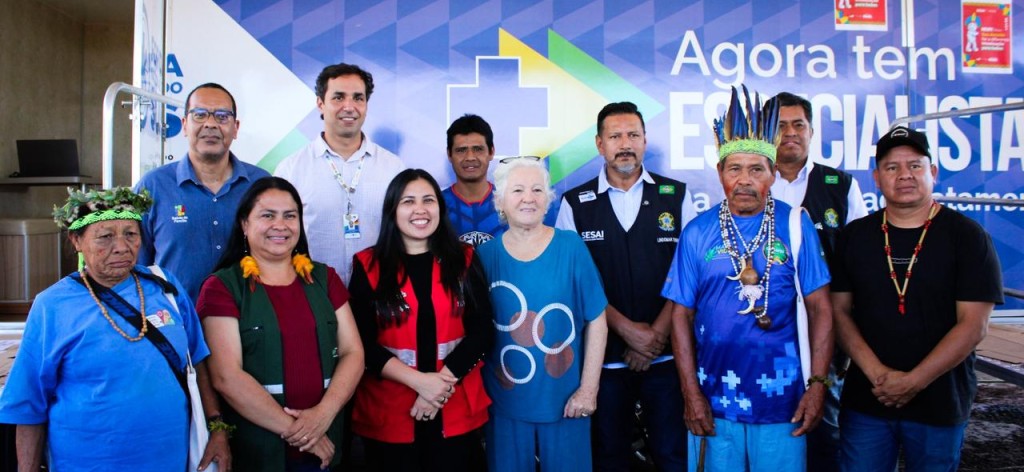
O Ministério da Saúde inaugura, neste sábado (25), uma unidade móvel na aldeia Bororó II, localizada na Reserva Indígena de Dourados (MS). A iniciativa contará com a presença da secretária de Saúde Indígena do Ministério da Saúde (Sesai/MS), Lucinha Tremembé, e do diretor do departamento de Saúde da Família, José Eudes Barroso, reforçando o compromisso do Governo do Brasil com o enfrentamento da chikungunya no município. A nova estrutura representa mais uma ação estratégica para garantir atendimento próximo e qualificado às populações indígenas.
A unidade móvel federal passa a funcionar no território como ponto de atenção à saúde dentro da aldeia, com atuação das Equipes Multidisciplinares de Saúde Indígena (EMSI). A iniciativa fortalece o cuidado integral, respeita as especificidades culturais e amplia o acesso aos serviços do Sistema Único de Saúde (SUS). Com previsão de permanência de 90 dias na Reserva Indígena de Dourados, a estrutura reúne um consultório médico, uma sala de vacinação e um consultório multiprofissional, permitindo a oferta integrada de serviços de saúde.
“O Governo Federal não mediu esforços para que a gente efetivasse tudo que já foi dito aqui. O município decretou emergência e teve aporte financeiro de R$ 850 mil, para todo o grade Dourados. A gente conseguiu dar uma resposta e ela só foi possível porque temos profissionais comprometidos dentro do território. Que conhecem as lideranças, que conhecem os caciques, os pajés e conhecem como lidar. Digo isso porque sou profissional de território, sou profissional de saúde. Sei que se não tiver esse vínculo, essa confiança a gente não avança”, destacou a secretária Lucinha Tremembé.
A capacidade média chega a 50 atendimentos por dia, incluindo consultas, vacinação e acompanhamento multiprofissional. Para garantir o funcionamento da unidade, a equipe é composta por um médico, uma enfermeira, três técnicos de enfermagem e uma nutricionista, assegurando atendimento contínuo e qualificado à população indígena.
Entre os serviços ofertados estão o atendimento médico para avaliação e manejo clínico dos pacientes; a coleta de exames laboratoriais, inclusive para triagem da chikungunya; a vacinação de rotina; a realização de testes rápidos para ISTs e glicemia; o acompanhamento de gestantes, crianças (puericultura) e vigilância nutricional; o monitoramento de doenças crônicas, como diabetes e hipertensão; e a realização de procedimentos básicos de saúde.
Vacinação reforça estratégia
A inauguração da unidade ocorre em um momento estratégico para o enfrentamento da chikungunya no território. No dia 17 de abril, Dourados recebeu doses da vacina contra a doença, em ação coordenada pelo Ministério da Saúde em parceria com o Governo do Estado de Mato Grosso do Sul.
Ao todo, o estado começou a receber 46,5 mil doses do imunizante, desenvolvido pelo Instituto Butantan — o primeiro do mundo contra a doença. Dourados foi contemplado com 43,5 mil doses, enquanto Itaporã recebeu 3 mil.
A vacinação está prevista para iniciar no dia 27 de abril, com estratégia baseada em microplanejamento local, priorização de áreas de maior risco epidemiológico e ações extramuros, incluindo mobilização comunitária. O público-alvo são pessoas de 18 a 59 anos com maior risco de exposição ao vírus, conforme recomendação do Ministério da Saúde.
Investimentos ampliam capacidade de resposta
Além da unidade móvel e da vacina, o Ministério da Saúde investiu R$ 28,4 milhões em ações emergenciais para ampliar a capacidade de atendimento e fortalecer a rede assistencial especializada em Dourados e região. A atuação da Força Nacional do SUS resultou em mais de 2,5 mil atendimentos clínicos, 130 remoções, 358 visitas domiciliares e 804 exames realizados. Também houve atenção à saúde do trabalhador, com atendimentos às equipes envolvidas.
No início de abril, foram incorporados 50 novos Agentes de Combate às Endemias (ACE), que atuam diretamente nas aldeias Jaguapiru e Bororó, realizando visitas domiciliares, eliminação de criadouros e aplicação de inseticida com equipamentos de Ultrabaixo Volume (UBV) costal. A tecnologia empregada utiliza inseticidas de ação rápida, com efeito knockdown, capazes de interromper o ciclo de transmissão ao eliminar o mosquito adulto.
As equipes também atuam na remoção de resíduos e objetos que acumulam água parada, principais focos do Aedes aegypti. Até o momento, foram visitados 1,9 mil imóveis, o que resultou na retirada de 575 sacos de materiais inservíveis, ou seja, com potenciais criadouros do mosquito Aedes aegypti. Somam-se a essa força-tarefa 40 militares do Exército Brasileiro.
Além disso, foi iniciada a instalação de Estações Disseminadoras de Larvicida (EDLs), tecnologia incorporada ao SUS para ampliar o controle do vetor. Das mil unidades destinadas ao município, 324 já foram instaladas nos assentamentos Santa Fé e Santa Felicidade, Jockey Clube, Vila Mariana, Parque das Nações I e II, Terra Dourada, Comunidade Vitória, Parque do Lago I e II e imediações. O dispositivo permite que o próprio mosquito transporte o larvicida para criadouros de difícil acesso, interrompendo o ciclo de reprodução.
Também foram distribuídas 2 mil cestas de alimentos. A previsão é que, até junho, sejam distribuídas 6 mil unidades, em conjunto com a Funai, o Ministério do Desenvolvimento Social (MDS), a Companhia Nacional de Abastecimento (Conab) e a Defesa Civil.
Edjalma Borges
Ministério da Saúde
Fonte: Ministério da Saúde


Nívea Stelmann relembra ensaio polêmico da VIP e concorda com crítica de machista

Ministério da Saúde instala unidade móvel e reforça atendimento em saúde em Dourados (MS)

Mapa destaca estratégias de promoção comercial e internacionalização do agro na Feira Brasil na Mesa

Ministério da Saúde assina acordo e hospital privado de referência passa a atender pacientes do SUS em Guarulhos (SP)

Capobianco representa Brasil em reunião ministerial de Meio Ambiente do G7 na França
-

 Brasil7 dias ago
Saúde entrega primeiros veículos para transporte intermunicipal de pacientes e anuncia mais de R$ 400 milhões para o Ceará
-

 Economia7 dias ago
Inscrições para Prêmio de Inclusão e Diversidade Racial no Comércio Exterior encerram em 27 de abril
-
 Paraná4 dias ago
Em expansão na rede estadual, cursos técnicos já superam 137 mil alunos inscritos
-

 Esportes7 dias ago
Cruzeiro supera o Grêmio e respira fora do Z4 do Brasileirão
-
 Agro5 dias ago
Projeto que moderniza regras da aquicultura avança na Câmara e recebe apoio do setor
-

 Entretenimento6 dias ago
João Gomes e Ary Mirelle curtem dia em piscina de nova mansão: ‘Nosso cantinho’
-

 Entretenimento5 dias ago
Ana Paula Renault se emociona ao saber da morte do pai e revela ter ouvido a mãe
-

 Esportes6 dias ago
Coritiba vence Atlético-MG e acaba com seca no Brasileirão