Brasil
African leaders discuss on climate change impacts and local solutions at Global Ethical Stocktake

The Global Ethical Stocktake (GES) convened its Africa Regional Dialogue this Friday (September 5th) in Addis Ababa, Ethiopia, bringing together 28 African leaders to discuss on actions and pathways humanity must take to meet the Paris Agreement’s central goal: limiting global warming to 1.5°C above pre-industrial levels.
The gathering – the fourth in a series of six regional dialogues held across continents – brought to Ethiopia’s capital political, business, faith, civil society, Indigenous and local communities’ leaders, as well as artists, activists, and entrepreneurs from across Africa. Among those present were minister of the Environment and Climate Change of Brazil, Marina Silva; Africa regional co-leader of the GES and the managing director for Africa and Global Partnerships at the World Resources Institute (WRI), Wanjira Mathai; and Brazil’s Ambassador to Ethiopia, Jandyr Ferreira dos Santos. The COP30 Presidency was represented by its President, Ambassador André Corrêa do Lago; CEO Ana Toni; Youth Champion Marcele Oliveira; and Africa Special Envoy Carlos Lopes.
One of four pillars of social mobilization for COP30, the GES asks how far the world has come and what further measures must be taken to address climate change. The initiative rests on the principle that while humanity already has the technical solutions for ecological transformation, what is lacking is the ethical commitment to implement them.
The goal is to chart pathways to make this possible, aiming for a sustainable and prosperous future built on traditional science, the ancestral knowledge of Indigenous peoples and local communities, and climate solutions already being put into practice around the world.
The GES strengthens the global effort convened by the COP30 Presidency to advance the commitments made by nearly 200 countries under the Paris Agreement. Its central reference point is the UAE Consensus, adopted at COP28 after its first Global Stocktake, in which nations agreed to triple renewable energy capacity, double energy efficiency, halt and reverse deforestation, and transition away from fossil fuels in a fair, orderly, and equitable manner.
“President Lula says COP30 must be the ‘COP of truth.’ That is why he proposed the Global Ethical Stocktake on every continent, through both Regional and Self-Organized Dialogues. The results will be made available on a platform that can be delivered to mayors, governors, and presidents,” said minister Marina Silva. She stressed the importance of technical stocktakes, such as the one that led to the UAE Consensus, and the potential of the GES to encourage the implementation of these decisions in the face of “all the contradictions we are experiencing.”
For Wanjira Mathai, the GES reminds the world that climate negotiations are, above all, about people’s lives, while also shining a light on the roots and nature of the crisis. “This is not a crisis of technical failure, but of moral failure. And we as Africans know this intimately. We know and carry the scars of destruction. We carry the weight of broken promises, and at the same time, the brilliance of resistance. We bring with us the wisdom of our ancestors and the power of our youth,” she said.
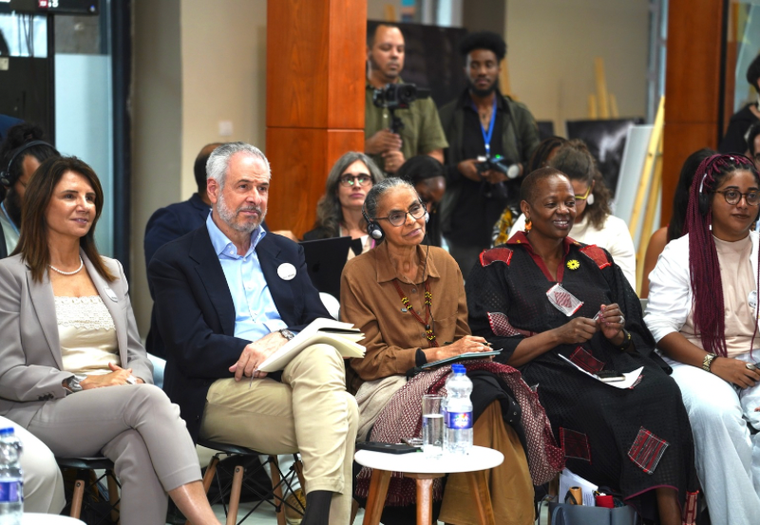
- From left to right: Ana Toni, André Corrêa do Lago, Marina Silva, Wanjira Mathai, and Marcele Oliveira – Photo: Fernando Donasci/MMA
Led by President Luiz Inácio Lula da Silva and UN Secretary-General António Guterres, the process will produce six regional reports and one synthesis report to be presented at the Pre-COP in October, in Brasília. The document will be submitted to the COP30 Presidency to be taken into account during the climate negotiations at the conference.
André Corrêa do Lago highlighted the progress made under the multilateral climate regime: “We are all talking about climate change today because of this process, which compelled countries to listen to scientists, experts, and local community leaders. That is why the GES is such a brilliant proposal: the more we discuss, the more we recognize how far we have come.”
COP30 CEO Ana Toni noted that the GES can encourage decision-makers to place people at the heart of negotiations: “Most of the time in the run-up to COPs, we talk about numbers and disputes. But if we can bring to COP30 what is happening here, then it won’t just be Brazil’s COP – it will be the People’s COP, as President Lula asked us to deliver.”
Marcele Oliveira emphasized the importance of tackling greenhouse gas emissions head-on as made by the participants of the African Dialogue. “There is freedom in this room, and that freedom must reach the negotiation rooms. Not because there is consensus, but because there is courage to name the problems. If something is wrong for one, it is wrong for all. That is ethics. If people, animals, or forests are suffering, then it is wrong. We need to invent new ways, and that starts by naming things as they are”, she declared.
About the Global Ethical Stocktake
The GES is carried out through Regional Dialogues to be held across different continents until October. The first meeting took place in London, United Kingdom, representing Europe; the second in Bogotá, Colombia, representing South, Central America and the Caribbean; and the third in New Delhi, India, representing Asia. The role of co-leadear in these regions was taken on by former Irish President Mary Robinson, former Chilean President Michelle Bachelet, and Nobel Peace Prize laureate Kailash Satyarthi, respectively.
The upcoming dialogues will be held in Oceania, co-led by former President of Kiribati Anote Tong; and in North America, co-led by U.S. leader and founder of the Center for Earth Ethics, Karenna Gore.
In addition to the Regional Dialogues, the GES also proposes Self-Organized Dialogues, promoted by civil society organizations and national and subnational governments, following the same methodology and principles of the core process.
The meeting in Addis Ababa was hosted at the Creative Hub Ethiopia, with support from the United Nations Development Programme (UNDP) and the Climate Emergency Collaboration Group (CECG).
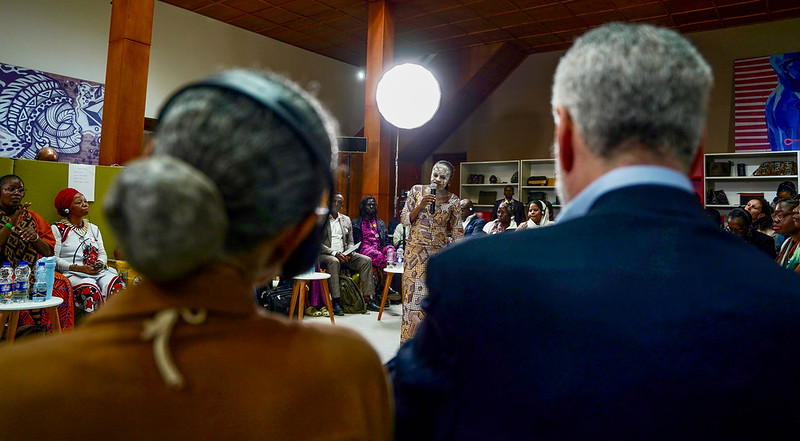
- A total of 28 leaders from across the continent took part in the Africa Dialogue – Photo: Fernando Donasci/MMA
List of Participants – Africa Regional Dialogue of the Global Ethical Stocktake (GES):
-
Aishah Ali Abdallah, environmental leader and educator, pioneer in leadership programs in natural areas and conservation, and national coordinator of the Leave No Trace program in Saudi Arabia;
-
Alfred Brownell, environmental lawyer and human rights defender from Liberia, recognized for his work protecting local communities threatened by large-scale deforestation and resource extraction projects;
-
Ana Toni, CEO of COP30;
-
Bishop Stephen Dami Mamza, Catholic bishop of the Diocese of Yola, northeastern Nigeria, recognized for his humanitarian and reconciliation work amid the violence of the Boko Haram insurgency;
-
Carlos Lopes, Africa Special Envoy for COP30;
-
Cécile Bibiane Ndjebet, environmental activist and community forestry engineer from Cameroon;
-
Chiyedza Her, entrepreneur and environmental activist, founder of the Ubuntu Alliance, which supports local farmers in transitioning to sustainable agricultural practices;
-
Dorothée Lisenge, Indigenous leader and founder of CFLEDD (Coalition des Femmes Leaders pour l’Environnement et le Développement Durable), winner of the 2018 Gender Just Climate Solutions Award;
-
Ambassador André Corrêa do Lago, President of COP30;
-
Emmanuel Jal, South Sudanese-Canadian musician and activist, and former child soldier, founder of Gua Africa, an organization that supports the education of people affected by war and conflict in East Africa;
-
Faten Aggad, Chief of Staff to the Vice President of the African Union Commission (AUC) and founder of the African Future Policies Hub (AFPH);
-
Hindou Oumarou Ibrahim, environmental activist from Chad, defender of Indigenous women’s rights and climate justice, and president of the Association of Indigenous Women and Peoples of Chad (AFPAT);
-
Hubert Danso, CEO of Africa Investor Group and a leading investment banking specialist focusing on infrastructure in Africa;
-
Jandyr Ferreira dos Santos, Brazil’s Ambassador to Ethiopia;
-
Jeanne Biloa, President of the Bagyeli’s Cultural and Development Association (BACUDA) in Cameroon, engaged in sustainable development initiatives to improve the quality of life in Campo Ma’an and neighboring regions;
-
Jibril Omar, Kenyan entrepreneur and CEO of OFGEN Africa, a company founded in 2013 and a regional leader in solar energy and storage solutions in Sub-Saharan Africa;
-
Kapupu Diwa, Twa Indigenous leader from the Democratic Republic of Congo and President of the League of Indigenous Pygmy Associations of Congo (LINAPYCO);
-
Kerezhi Sebany, Associate Director for Financial Development and Multilateral Institutions at the ONE Campaign, leading policy engagement with the IMF, World Bank, and African Development Bank;
-
Kumi Naidoo, South African social and environmental justice activist, President of the Fossil Fuel Non-Proliferation Treaty Initiative;
-
Lindi Dlamini, traditional healer, social scientist, and pioneering executive, with more than 25 years in financial services and 20 years in leadership roles;
-
Marcele Oliveira, Youth Champion of COP30;
-
Marina Silva, Minister of the Environment and Climate Change of Brazil;
-
Million Belay, member of the IPES-Food panel; co-founder and General Coordinator of the Alliance for Food Sovereignty in Africa (AFSA); expert in forest conservation, Indigenous livelihoods, and food and seed sovereignty;
-
Mithika Mwenda, co-founder of the Pan African Climate Justice Alliance (PACJA);
-
Mohamed Adow, founder and Executive Director of Power Shift Africa and one of the continent’s leading voices for climate justice;
-
Nisreen Elsaim, young climate activist and junior climate negotiator, member of the UN Secretary-General’s Youth Advisory Group on Climate Change;
-
Ollier Andrianambinina, geographer and environmentalist from Madagascar, focused on sustainable development and conservation;
-
Pato Kelesitse, young climate justice activist with strong engagement in gender, youth, and sustainability; founder of Sustain267, which includes the Sustain267 Podcast amplifying African climate voices;
-
Pauline Nantongo Kalunda, Executive Director of ECOTRUST, with more than 20 years of experience developing innovative conservation finance solutions;
-
Philip Osafa-Kwako, founder of Akosombo Textiles in Ghana, promoting local manufacturing, innovation, and sustainable practices;
-
Tracy Atieno, young deaf leader from the organization Young Women of Africa;
-
Wangui Kaniaru, Kenyan lawyer specialized in mergers and acquisitions and corporate regulation, increasingly active in sustainability, climate transition, and responsible business governance;
-
Wanjira Mathai, co-leader of the GES in Africa and the managing director for Africa and Global Partnerships at the World Resources Institute (WRI).
Special Advisory for Social Communication of the MMA
[email protected]
+55 (61) 2028-1227 / 1051
Access the MMA’s Flickr

Brasil
Ministério da Saúde autoriza início das obras de ampliação do Hospital Universitário de Roraima

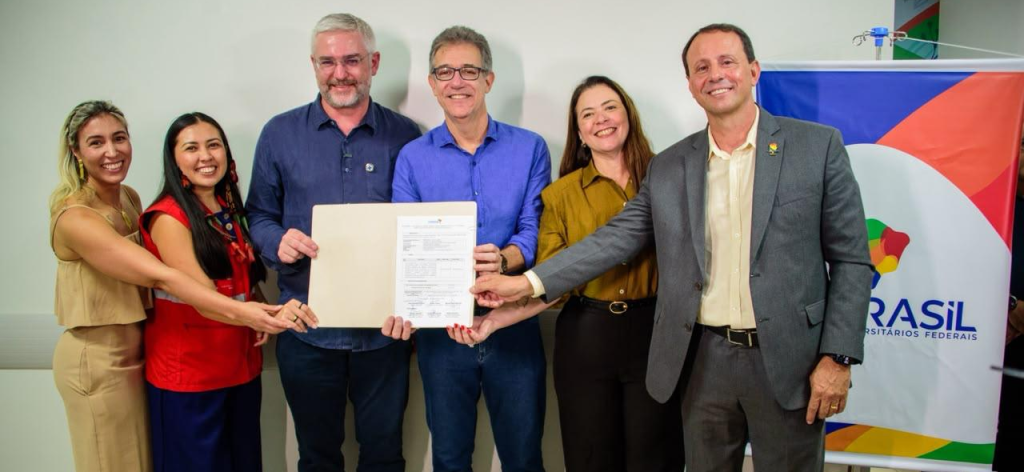
O secretário-executivo do Ministério da Saúde, Adriano Massuda, e a secretária de Saúde Indígena da pasta, Lucinha Tremembé, assinaram nesta segunda-feira (28) a ordem de serviço para a construção do Bloco C do Hospital Universitário da Universidade Federal de Roraima (HU-UFRR). A obra conta com investimento federal de R$ 70 milhões, com execução pela HU Brasil (Hospitais Universitários Federais).
Primeiro hospital universitário de Roraima, o HU-UFRR terá sua capacidade de atendimento ampliada com a construção do novo bloco, fortalecendo a oferta de atenção especializada pelo Sistema Único de Saúde (SUS) no estado. Atualmente, a unidade conta com 128 leitos, sendo 36 destinados à população indígena.
“Essa ampliação vai ter mais leitos, mas também vai ter mais capacidade resolutiva. São seis salas cirúrgicas, com capacidade de realizar procedimentos de alta complexidade e leitos de unidade de terapia intensiva para atender casos de maior complexidade, beneficiando a população de Roraima, especialmente os povos indígenas”, destacou Massuda.
Referência no atendimento aos povos indígenas
O HU-UFRR desempenha um papel estratégico no atendimento à população indígena. Entre abril de 2025 e julho de 2026, o hospital registrou 2.056 internações, das quais 572 foram de pacientes indígenas. No atendimento ambulatorial, entre novembro de 2025 e julho de 2026, foram atendidos 2.846 pacientes, sendo 355 indígenas. A unidade recebe pessoas de cerca de 13 etnias, incluindo pacientes provenientes da Guiana e da Venezuela.
O hospital conta com a Unidade de Retaguarda Hospitalar dos Povos Indígenas, que oferece acolhimento e assistência diferenciados, respeitando as especificidades culturais dessa população. A estrutura inclui leitos redários e espaços destinados às práticas culturais indígenas.
O HU-UFRR também participa de mutirões articulados pela HU Brasil e pelo Ministério da Saúde para atender pacientes encaminhados pelos Distritos Sanitários Especiais Indígenas (DSEIs) e pelas Casas de Saúde Indígena (CASAIs).
“O cuidado em saúde indígena precisa considerar as especificidades socioculturais dos povos indígenas. A ampliação do hospital fortalece o acesso à atenção especializada e a possibilidade de oferecer uma assistência equânime, garantindo a qualidade do cuidado, o respeito às necessidades dos povos indígenas e acolhimento culturalmente adequado”, destacou a secretária de Saúde Indígena, Lucinha Tremembé.
Novo tomógrafo
Além da ampliação da estrutura hospitalar, o Ministério da Saúde está adquirindo um novo tomógrafo para o HU-UFRR, com chegada prevista para o primeiro semestre de 2027. O equipamento substituirá o aparelho atual, pertencente ao governo estadual, e reforçará a capacidade de realização de exames de imagem na própria unidade.
CAPS de Pacaraima
Em Pacaraima, na fronteira com a Venezuela, o secretário-executivo visitou as obras do Centro de Atenção Psicossocial (CAPS) do município. A construção conta com investimento de R$ 2,145 milhões e está com 92% de execução física. A conclusão está prevista para 1º de outubro de 2026.
Habilitado pelo Ministério da Saúde por meio da Portaria GM/MS nº 4.089, de 28 de maio de 2024, o serviço vai fortalecer a Rede de Atenção Psicossocial em uma região marcada pela intensa circulação de pessoas.
Operação Acolhida
A agenda também incluiu o acompanhamento das ações de saúde da Operação Acolhida, que garantem vacinação e atenção primária à população migrante desde sua chegada ao Brasil.
Por meio do Projeto Saúde nas Fronteiras, executado pela Agência Brasileira de Apoio à Gestão do SUS (AgSUS), 38 profissionais atuam em Boa Vista e Pacaraima. Desde agosto de 2025, as equipes realizaram 41.925 atendimentos individuais de atenção primária. Também foram registrados 861 teleatendimentos desde outubro de 2025. O investimento previsto no projeto é de R$ 5,66 milhões.
Entre 2023 e agosto de 2026, foram aplicadas mais de 677 mil doses de vacinas em Pacaraima e mais de 54 mil em Boa Vista. O abastecimento das salas de vacinação está regular.
Ministério da Saúde
Fonte: Ministério da Saúde


Ministério da Saúde autoriza início das obras de ampliação do Hospital Universitário de Roraima

Presidente da República visita complexo hospitalar da Benemérita Sociedade Portuguesa Beneficente do Pará

Canetas emagrecedoras podem chegar ao SUS com até 90% de desconto após ações do Ministério da Saúde e da Anvisa

Educação digital e midiática é tema de episódio do PodMEC

Dados do emprego formal de agosto serão divulgados nesta terça-feira (29)
-

 Paraná5 dias ago
MPPR ajuíza ação para a suspensão de contratações temporárias na Secretaria Estadual de Saúde e convocação de candidatos aprovados em concurso público
-

 Paraná5 dias ago
Em Marialva, homem denunciado pelo Ministério Público do Paraná por estuprar e engravidar a própria filha adolescente é condenado a quase 56 anos de reclusão
-

 Agro7 dias ago
Trigo sobe com safra 27% menor e qualidade ameaçada pelas chuvas
-
 Brasil7 dias ago
Trilha Amazônia Atlântica impulsiona ecoturismo no Pará, em corredor que liga Belém à Serra do Piriá
-

 Esportes7 dias ago
Cuiabá vence o Náutico por 3 a 0 na Arena Pantanal
-
 Política Nacional4 dias ago
Brasil terá quase 2 milhões de mesários nas eleições de 2026
-

 Economia6 dias ago
MDIC disponibiliza Programa de Capacitação em Construção Industrializada
-
 Educação6 dias ago
Alunos nota mil inspiram preparação para a redação do Enem 2026