Brasil
COP15 expands protection for 40 migratory species worldwide

Held in Campo Grande, Mato Grosso do Sul, on the doorstep of the Pantanal, the 15th Meeting of the Conference of the Parties to the Convention on the Conservation of Migratory Species of Wild Animals (CMS COP15) concluded this Sunday (March 29) with progress in the global protection of migratory species, their routes and their habitats.
For the first time, the conference included or reclassified 40 species, subspecies and populations in Appendices I and II, which list, respectively, migratory species threatened with extinction and migratory species that require international cooperation for their conservation. Of these 40, 16 occur in Brazil.
The outcome strengthens multilateralism, one of the main guidelines of the foreign policy of the Government of Brazil, and consolidates the country’s leadership role in the implementation of international agreements.
At the High-Level Segment of COP15, on March 22, President Luiz Inácio Lula da Silva reaffirmed Brazil’s commitment to the conservation of migratory species and signed decrees expanding the Pantanal Matogrossense National Park and the Taiamã Ecological Station, in the state of Mato Grosso, as well as creating the Córregos dos Vales do Norte de Minas Sustainable Development Reserve, in the state of Minas Gerais, protecting more than 148,000 hectares in the Pantanal and Cerrado biomes.
A total of 69 proposals received final approval during the closing plenary of COP15, including 15 Appendix amendments (covering 40 species, subspecies and populations), 15 Concerted Actions and 39 resolutions, in a session chaired by COP15 President and Executive Secretary of Brazil’s Ministry of the Environment and Climate Change (MMA), João Paulo Capobianco. “COP15 succeeded in expanding the protection of migratory animals by including 40 species, subspecies and populations in CMS Appendices I and II and approving 15 Concerted Actions for conservation,” he said.
“In addition, the Conference resulted in the adoption of 39 resolutions, including an unprecedented proposal aimed at building a resource mobilization strategy to expand support for developing countries in implementing the Convention. The discussions also highlighted the need to protect and strengthen connectivity, migratory routes, ecological corridors and healthy habitats. These elements are not merely geographic pathways, but true lifelines that sustain biodiversity and ecological balance, and protecting them requires not only political will, but also coordinated action across different jurisdictions, sectors and actors,” he explained.
“There is no doubt that CMS is one of the most important international environmental agreements. CMS addresses the same environmental pressures as the three Rio Conventions, the chemicals agreements and others. However, it does so from the perspective of the billions of extraordinary living creatures found around the world that carry out one of the planet’s most remarkable phenomena: migration. They connect countries, continents and communities,” emphasized CMS Executive Secretary Amy Fraenkel in her speech at the final plenary.
Also among the main approved outcomes are 15 proposals led or co-led by Brazil. Among them are eight additions to CMS Appendices I and II and five Concerted Actions, as well as one resolution and one action plan (see below).
The inclusion of the barred sorubim (Pseudoplatystoma corruscans) in Appendix II stemmed from a proposal submitted by Brazil. This species, typical of large South American river basins, is considered strategic for the food security and economy of traditional and riverine communities. Another relevant approval under Appendix II was that of the Iberá seedeater (Sporophila iberaensis), aimed at strengthening regional initiatives for the conservation of migratory grassland birds in South America.
The approval of the Regional Action Plan for Amazon Migratory Catfish, including dourada (Brachyplatystoma rousseauxii) and piramutaba (Brachyplatystoma vaillantii), also stood out as an example of international cooperation and social participation.
Led by Brazil, with support from the Amazon Waters Alliance (AAA), Wildlife Conservation Society (WCS), The Nature Conservancy (TNC), the Amazon Sustainable Landscapes Project (ASL Brasil), Conservation International (CI-Brasil) and the Gordon and Betty Moore Foundation, and articulated with Bolivia, Colombia, Ecuador, Peru and Venezuela, the plan was developed through an intergovernmental process that brought together several civil society organizations and government bodies.
The inclusion of the giant otter (Pteronura brasiliensis) in CMS Appendices I and II also had Brazil’s support. The country endorsed the French proposal, together with Peru, Bolivia, Panama, Ecuador, Paraguay, the European Union, Senegal and Venezuela, to protect the species found in the Pantanal and Amazon biomes.
Also noteworthy was the inclusion of other species that occur in Brazil, such as thresher sharks (Alopias) and hammerhead sharks (Sphyrna), in Appendix I.
In addition to species protection measures, the conference is also responsible for deliberating on the budget of the Convention Secretariat. COP15 approved an unprecedented initiative to prepare a resource mobilization strategy focused on supporting developing countries in implementing CMS.
COP15 negotiations began on March 23 and brought together more than 2,400 participants. Brazil will remain in the presidency of the conference for the next three years and will now work on implementing the approved proposals until the next edition of the conference.
In celebration of the 50th anniversary of CMS, Germany was announced as the host of COP16, to be held in 2029. The city of Bonn, Germany, was the site of the signing of the treaty on June 23, 1979, that gave rise to CMS.
During COP15, the “Connection Without Borders” space, open to the public, also took place, reinforcing through debates and cultural programming the importance of international cooperation for the conservation of migratory species and their habitats.
In addition, the conference received support from the Federal University of Mato Grosso do Sul (UFMS), which recruited 150 volunteers to work in the Blue Zone. UFMS also organized COP15 POP, another initiative aimed at the public, featuring cultural and scientific trails, bird and butterfly watching, Planetarium sessions, and visits to laboratories and museums, among other activities.
See the outcomes led and co-led by Brazil at COP15:
Appendix I
- Inclusion of the Hudsonian whimbrel (Numenius phaeopus hudsonicus)
- Inclusion of the Hudsonian godwit (Limosa haemastica)
- Inclusion of petrels/gadfly petrels (Pterodroma, Pseudobulweria) (also in Appendix II)
Appendix II
- Inclusion of the barred sorubim (Pseudoplatystoma corruscans)
- Inclusion of the narrownose smooth-hound (Mustelus schmitti)
- Inclusion of the Iberá seedeater (Sporophila iberaensis)
- Inclusion of petrels/gadfly petrels (Pterodroma, Pseudobulweria) (also in Appendix I)
Concerted Actions
Aquatic mammals
- Report and renewal of the Concerted Action for the franciscana dolphin (Pontoporia blainvillei)
- Concerted Action for Lahille’s bottlenose dolphin (Tursiops truncatus gephyreus)
Sharks and rays
- Concerted Action for the sand tiger shark (Carcharias taurus)
- Concerted Action for the basking shark (Cetorhinus maximus)
- Concerted Action for manta and devil rays (Mobulidae)
Action Plan
Migratory catfish
Resolution and Action Plan for the Conservation of Amazon Migratory Catfish, including dourada (Brachyplatystoma rousseauxii) and piramutaba (Brachyplatystoma vaillantii)
Learn more about each of the approved proposals
Franciscana dolphin (Pontoporia blainvillei)
During COP15, the Report on the Concerted Action for the franciscana dolphin (Pontoporia blainvillei) was presented and approved. Since its approval at COP14, Brazil, Argentina and Uruguay have developed a conservation plan, strengthened national and regional technical capacities, adopted measures to address bycatch and other threats, and secured the inclusion of the franciscana in the national endangered species lists of all three countries. Now, with the renewal of the Concerted Action for the franciscana dolphin, measures will be adopted for population monitoring and reducing bycatch.
Lahille’s bottlenose dolphin (Tursiops truncatus gephyreus)
The Concerted Action for Lahille’s bottlenose dolphin provides for the development of a five-year Action Plan (2026–2031) with measures to mitigate threats and raise public awareness. At the initiative of Brazil, Argentina and Uruguay, Lahille’s bottlenose dolphin was included in CMS Appendices I and II at COP14. Countries are now deepening conservation actions for the species with the approval of this proposal.
Barred sorubim (Pseudoplatystoma corruscans)
The inclusion of the species in CMS Appendix II seeks to promote coordinated fisheries management, conservation of migratory routes and control of hybridization by strengthening international cooperation, allowing the exchange of scientific data and the alignment of conservation policies among the species’ range states: Brazil, Argentina, Bolivia, Paraguay and Uruguay.
Amazon Migratory Catfish
The Regional Action Plan for Amazon Migratory Catfish, including dourada (Brachyplatystoma rousseauxii) and piramutaba (Brachyplatystoma vaillantii), is the result of an effort to establish action plans for the recovery of threatened species. The initiative’s strategic objectives include the conservation of critical habitats and river connectivity, strengthening the scientific and local knowledge base and international cooperation, fostering sustainable value chains, and harmonizing policies and regulatory frameworks. Dourada (Brachyplatystoma rousseauxii) and piramutaba (B. vaillantii) were included in CMS Appendix II during the previous edition, COP14.
Atlas of the Migratory Routes of the Americas
Launched at a special event, the Atlas of the Migratory Routes of the Americas consolidates, for the first time, detailed data on the movements of 622 species that cross the continent, establishing an unprecedented scientific basis to guide integrated environmental policies among countries. Developed by CMS in partnership with the Cornell Lab of Ornithology, Brazil’s Ministry of the Environment and Climate Change and the United States Fish and Wildlife Service (USFWS), the Atlas identifies the so-called Areas of Bird Concentration (ABCs) throughout all phases of the species’ life cycle, based on millions of citizen science records generated on the eBird platform. The tool makes it possible to map with unprecedented precision where birds breed, rest and even spend the winter, highlighting the ecological corridors connecting the biomes of the Americas.
Narrownose smooth-hound (Mustelus schmitti)
With a population collapse estimated at more than 80% over the last three generations, the narrownose smooth-hound now benefits from a cooperation mechanism that can encourage the adoption of joint measures for monitoring, bycatch mitigation, protection of critical areas and exchange of scientific information.
Sand tiger shark (Carcharias taurus)
Listed in CMS Appendices I and II, the species is critically endangered in the Southwest Atlantic. In addition to updating the Regional Conservation Action Plan (RCAP), the Concerted Action proposal aims to intensify scientific and policy cooperation among countries, with emphasis on connectivity between critical areas for the species’ reproduction, growth and feeding, as well as the creation of a network of researchers, NGOs, aquariums, fishers, government agencies and local communities.
Basking shark (Cetorhinus maximus)
The basking shark has occasional records along Brazil’s southern and southeastern coast and has already suffered a 90% population decline in the North Pacific, highlighting the need for coordinated global action to mitigate the main threats and conserve the species. The proposal submitted by the Marine Research and Conservation Foundation (MARECO) and the Irish Basking Shark Group (IBSG) has Brazil’s support.
Manta and devil rays (Mobulidae)
The goal is for the Parties to this Concerted Action to implement protection measures at the national level to prohibit the capture and landing of manta and devil rays, with a view to halting the sharp population decline of these species, which are already listed in Appendices I and II of the Convention. To this end, the proposal focuses on improving enforcement capacity and the traceability of fisheries and trade, conducting campaigns to reduce demand for products derived from these rays, promoting good practices in interactions with sustainable tourism, and developing research to support science-based management and reduce fishing-related mortality of these species.
Petrels or gadfly petrels (Pterodroma, Pseudobulweria)
Twenty-four species of petrels or gadfly petrels were approved for inclusion in Appendices I and II.
Although the species cross 64 countries, they breed in restricted areas, such as the Trindade petrel (Pterodroma arminjoniana), which breeds on Trindade Island, off the coast of Espírito Santo state. The species are threatened by different factors such as attraction to artificial lights; collisions with infrastructure such as power transmission lines and communication towers; and other threats associated with resource exploitation, development and production, including oil and gas drilling, mining and quarrying, and renewable energy (geothermal, solar, wind, tidal); sea-level rise and coastal flooding; extreme weather events; diseases such as avian influenza; bycatch in fisheries; and marine pollution.
Hudsonian whimbrel (Numenius phaeopus hudsonicus)
This species undertakes long-distance migrations between breeding areas in Alaska and Canada and non-breeding areas in South America, across more than 30 countries. Its inclusion in Appendix I aims to strengthen the initiative so that countries can work together to conserve its habitats throughout its annual cycle and promote other conservation and management measures, in addition to improving its conservation status.
Hudsonian godwit (Limosa haemastica)
Recorded in more than 60 countries, it undertakes one of the longest migrations among land birds and is affected by the loss of inland wetland habitats, especially due to agriculture; anthropogenic disturbance in intertidal habitats, especially from aquaculture; hunting in some countries; and climate change. Its inclusion in CMS Appendix I proposes an internationally coordinated conservation effort.
Iberá seedeater (Sporophila iberaensis)
Because its ecology is still little known due to its relatively recent description, the inclusion of the species in CMS Appendix II will bring visibility and strengthen international cooperation to expand scientific knowledge about the Iberá seedeater, improving understanding of its population dynamics and threats.
Special Advisory for Social Communication of the MMA
[email protected]
+55 (61) 2028-1227 / 1051
Visit MMA’s Flickr page


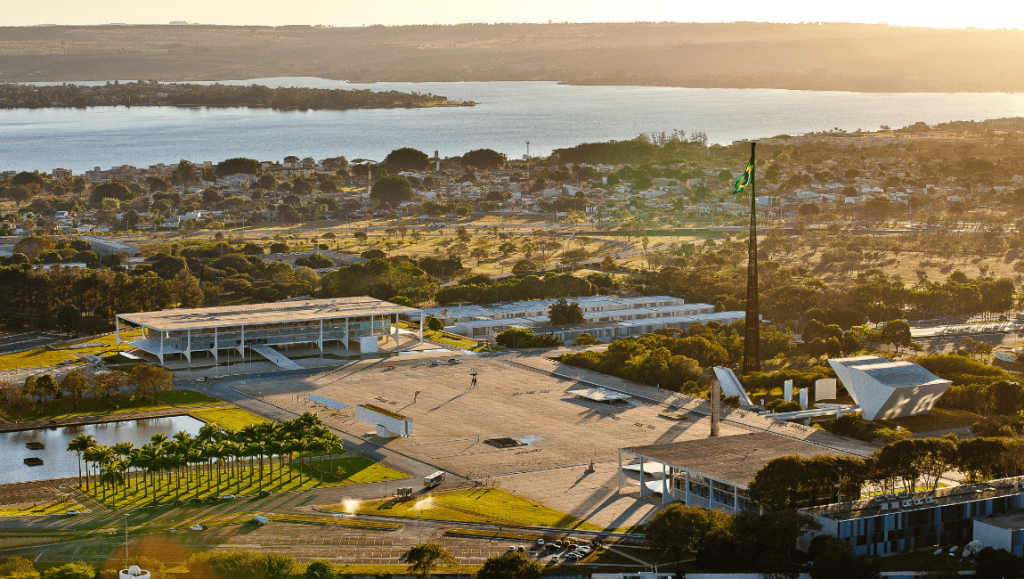
Inaugurada em 21 de abril de 1960, Brasília foi construída para abrigar a nova capital do país e simbolizar um projeto de integração nacional. Em pouco mais de três anos, uma área antes ocupada pela vegetação do Cerrado deu lugar a uma cidade planejada, marcada por monumentos, amplos espaços públicos e soluções urbanísticas que se tornaram referência em todo o mundo.
Reconhecida como Patrimônio Mundial pela Unesco em 1987, Brasília foi a primeira – e até hoje única – cidade moderna a receber esse título. A capital conquistou reconhecimento internacional graças ao projeto inovador do Plano Piloto e ao conjunto arquitetônico que a transformou em uma referência do urbanismo modernista.
Além de sediar os principais órgãos do Governo Federal, a cidade reúne museus, parques, espaços culturais e monumentos que atraem visitantes interessados em história, arquitetura, cultura e turismo cívico.
Reconhecimento
A Unesco reconheceu Brasília por representar um dos mais importantes exemplos do urbanismo modernista do século 20. A cidade foi planejada para integrar áreas residenciais, administrativas, espaços públicos, mobilidade e grandes áreas verdes em um único projeto urbano, preservando até hoje as características originais do Plano Piloto.
Entre os elementos que justificaram o reconhecimento estão o Plano Piloto, o Eixo Monumental, a Praça dos Três Poderes, a Esplanada dos Ministérios e as superquadras residenciais.
Também fazem parte desse conjunto edifícios que se tornaram símbolos da capital, como o Congresso Nacional, o Palácio do Planalto, o Supremo Tribunal Federal, a Catedral Metropolitana e o Teatro Nacional. Juntos, eles transformaram Brasília em uma das maiores referências mundiais da arquitetura e do urbanismo modernos.
O que fazer
Entre os principais atrativos estão:
-
Praça dos Três Poderes: reúne o Palácio do Planalto, o Congresso Nacional e o Supremo Tribunal Federal, além de importantes monumentos e obras de arte.
-
Catedral Metropolitana de Brasília: um dos principais cartões-postais da cidade, chama atenção pelas colunas curvas e pelos vitrais que iluminam o interior.
-
Esplanada dos Ministérios: concentra os principais prédios públicos da capital e oferece uma das vistas mais conhecidas de Brasília.
-
Memorial JK: dedicado ao ex-presidente Juscelino Kubitschek, reúne objetos pessoais, documentos e parte da história da construção da capital.
-
Palácio da Alvorada: residência oficial da Presidência da República, às margens do Lago Paranoá.
-
Torre de TV: oferece vista panorâmica da cidade e abriga uma tradicional feira de artesanato e gastronomia regional.
-
Lago Paranoá: ideal para passeios de barco, esportes náuticos, caminhadas e momentos de lazer.
-
Parque da Cidade Dona Sarah Kubitschek: maior parque urbano do Brasil, oferece áreas verdes, pistas para caminhada e ciclismo, espaços esportivos e opções de lazer.
Quando visitar
Brasília pode ser visitada durante todo o ano.
-
Maio a setembro: período de estiagem, com clima seco, céu aberto e temperaturas agradáveis para conhecer os monumentos e caminhar pela cidade.
-
Outubro a abril: período chuvoso, quando o Cerrado ganha novos tons de verde e os jardins ficam ainda mais floridos.
-
21 de abril: aniversário de Brasília, com programação especial, eventos culturais e atividades abertas ao público.
Em qualquer época, vale reservar pelo menos dois dias da viagem para conhecer os principais monumentos e espaços culturais da capital.
Como chegar
Brasília está localizada no Distrito Federal e possui um dos principais aeroportos do país. Quem chega de avião desembarca no Aeroporto Internacional de Brasília – Presidente Juscelino Kubitschek, que recebe voos diretos de todas as regiões do Brasil e de destinos internacionais.
Para quem viaja de carro, os principais acessos são pelas rodovias BR-040, que liga Brasília a Belo Horizonte e ao Rio de Janeiro; BR-060, que conecta a capital a Goiânia e Mato Grosso do Sul; BR-020, em direção ao Nordeste; e BR-050, que faz a ligação com o Triângulo Mineiro e com o estado de São Paulo.
A partir do aeroporto ou das rodovias, o Plano Piloto pode ser acessado facilmente de carro, táxi, transporte por aplicativo ou ônibus.
Patrimônio Mundial
A Lista do Patrimônio Mundial reúne locais reconhecidos pela Unesco por sua importância cultural, natural ou histórica para a humanidade. Os bens inscritos são considerados de Valor Universal Excepcional e passam a integrar uma relação internacional de patrimônios cuja preservação é de interesse mundial.
O Brasil possui atualmente 26 bens inscritos na lista, distribuídos entre as categorias Cultural, Natural e Mista.
Por Natália Moraes
Assessoria de Comunicação Social do Ministério do Turismo
Fonte: Ministério do Turismo


Brasília: única cidade moderna reconhecida como Patrimônio Mundial da Unesco

Ministério da Saúde participa de fórum internacional que debate produção de medicamentos e tecnologias na América Latina

Davi Alcolumbre acerta prioridades do Congresso em reunião com Lula e Motta

Conheça a história de uma aquicultora que vive na região da pérola do Tapajós

Ministro Márcio Elias Rosa participa de acordo entre ApexBrasil e indústria indiana
-

 Economia6 dias ago
Portaria interministerial amplia alcance do Move Brasil – Táxi Aplicativos
-

 Esportes7 dias ago
Palmeiras vence Cerro Porteño no Paraguai e avança às quartas de final da Libertadores
-

 Esportes6 dias ago
Santos segura empate no Equador e avança às quartas da Copa Sul-Americana
-
 Política Nacional5 dias ago
Mulheres com implante contraceptivo banido pedem política de assistência
-

 Esportes7 dias ago
Flamengo vence o Cruzeiro no Maracanã e avança às quartas de final da Libertadores
-

 Educação5 dias ago
Encceja 2026: provas serão aplicadas neste domingo (23/8)
-

 Esportes7 dias ago
Cuiabá vence Operário-PR na Arena Pantanal pela Série B
-

 Brasil6 dias ago
Dia D de vacinação contra 20 doenças acontece neste sábado (22) em Pernambuco